
J. P. Coutinho Guimarães (Principal Investigator)
João specializes in contemporary experimental poetry and Science Studies. His first book, American Experimental Poetry and the New Organic Form was released by Bloomsbury in 2025. In that project he explored the relation between poetic language and the so-called “languages of nature” (the divine word, the genetic code, cybernetic information, biosemiotics, etc). He argued that the nineteenth century concept of “living form” is not anathema to avant-garde writing, reportedly anti-organic in its uncompromising disjointedness. By contrast, he contended that the concept survived and flourished, under different guises, in the work of a number of contemporary experimental poets. He is currently wrapping up a project about American innovative poetry and aging, titled Whirlpools of Time, also under contract with Bloomsbury. This new book investigates how older experimental American poets challenge the notion that vanguardism is a caprice of youth and the idea that old age is a time of recapitulation, reconciliation and resignation. The monograph surveys the recent work of Charles Bernstein, Lyn Hejinian, Ron Silliman and Rachel Blau DuPlessis. These poets position themselves against a poetics of summation, sobriety and depth, highlighting instead the importance of discontinuity, disbelief, immaturity, forgetfulness and humour for literary prospection and late life well-being. He has also edited two essay collections for transcript publishing: Aging Experiments: Futures and Fantasies of Old Age and Fear of Aging: Old Age in Horror Fiction and Film. He is a researcher and a teacher at the University of Porto (ILCML).
Ana Carolina Meireles
Ana is a Master’s student in Literary, Cultural and Interartistic Studies, with a specialization in Comparative Studies, at the University of Porto, Portugal. She holds a BA in Languages, Literatures and Cultures, in Portuguese and French Studies, from the same institution. Her current research focuses on Ecocriticism, Animal, Feminist and Intermedia Studies, and she is now working on her Master’s thesis about Zoopoetics in contemporary Portuguese poetry written by women. She is a Master Student Fellow at Centro de Investigação Transdisciplinar: Cultura, Espaço, Memória (CITCEM), with a project titled “Natureza, Animais, Poesia e Inconsciente: Ler o Surrealismo Português à Luz da Ecocrítica” [Nature, Animals, Poetry and the Unconscious: Reading Portuguese Surrealism in the Light of Ecocriticism]. She has also co-edited the book Escrever com os Pardais: Notas para uma Zoopoética [Writing with the Sparrows: Notes for a Zoopoetics], published in February 2025 by the Instituto de Literatura Comparada Margarida Losa.
Ana P. H. Salvan
Ana is a Brazilian anthropologist and an affiliate of the SETI Institute. She completed her Ph.D. in Social Anthropology in September 2024 at the Universidade Federal de Santa Catarina in Brazil. Her doctoral research was conducted at the AstroLab, the country’s first research facility dedicated exclusively to Astrobiology. Her thesis, titled “Extremes, Extremophiles, and Extraterrestrials: Doing Life on Earth and Beyond in an Astrobiology Laboratory,” focused on Astrobiology as an emerging scientific field, and it sought to explore how notions such as the extreme inform the ongoing search for extraterrestrial life. Research interests: Science & Technology Studies; Anthropology of Life; Astrobiology; Search for Extraterrestrial Intelligence (SETI).
Diogo Marques
Diogo is a researcher in Digital Humanities at the Centre for Digital Culture and Innovation (CODA) and a member of ILCML – Instituto de Literatura Comparada Margarida Losa, FLUP. In 2018, he received a Ph.D. in Materialities of Literature from the University of Coimbra. His thesis focuses on the analysis of haptic interfaces as expressive elements in computational literature. He was a postdoctoral researcher at IELT – Instituto de Estudos de Literatura e Tradição (NOVA FCSH) within the scope of the VAST project: Values Across Space & Time (2020–21) and a Research Fellow at Fernando Pessoa University, Porto (2018–2020). In 2020, he co-organized a volume of essays titled Investigação-Experimentação-Criação: em Arte-Ciência-Tecnologia (Porto: FFP Press). He is an author, curator, and translator of experimental (cyber)literature and a co-founding member of the wr3ad1ng d1g1t5 collective. He collaborates with IELT (NOVA FCSH), MATLIT LAB – Humanities Laboratory of the University of Coimbra, Artech-Int – International Association of Computational Art, ELO – Electronic Literature Organization, and APEAA – Portuguese Association of Anglo-American Studies. He is also the Principal Investigator of the DARIAH ERIC project Breaking the Code: Algorithmic Non-Normativity in Creative Digital Humanities (2025–26).
Inês Caldas
Inês Caldas is a Graphic Designer and Visual Artist currently pursuing a Master’s degree in Literary, Cultural and Interart Studies at the University of Porto. She holds a degree in Communication Design (2017) and completed a program in Illustrated and Animated Storytelling at St. Joost School of Art & Design in the Netherlands (2016). Her research focuses on Digital Humanities, Intermedial Studies, Speculative Fiction, and Posthumanist thought. She is currently writing her MA thesis, “Science in Fiction and Fictional Realities: A New Cosmology of the 21st Century Human”, which critically examines the sociocultural impact of Artificial Intelligence across the domains of Art and various literary and narrative forms. Professionally, Inês is engaged in illustration, design, independent publishing and media arts. She is the co-writer, co-editor, and founder of aguça mag (2021), an independent publication dedicated to Illustration and Graphic Arts. Inês is also a founding partner of Asteróide Fértil (2023), a cultural association based in Braga, Portugal, specializing in Media Art.
Inês Pastor
Inês is an MA candidate in Anglo-American Studies at the Faculty of Arts and Humanities of the University of Porto, from where she graduated with a BA in Languages, Literatures, and Cultures (major in English) in 2024. She has published on Frank Herbert and Ursula K. Le Guin in Via Panoramica: A Journal of Anglo-American Studies. Her main research interests are Speculative Fiction and Utopian Studies, though she also has an affinity for Irish Studies and Gothic/Horror Studies.
Isadora Cavalcanti
Isadora is an interdisciplinary researcher with a degree in Social Communication from the Pontifical Catholic University of Rio de Janeiro (2015), and is currently pursuing her second degree in Literature and Creative Writing at the same institution. Through the intersection of literature, cinema, and the visual arts, she examines the intimate relationship between conceptions of the ‘human’—its agency and subjectivity e.g.—and scientific and technological advancements, within the context of posthumanism. She is also enrolled in the Master’s program in Literary, Cultural, and Interartistic Studies at the University of Porto (currently on pause).
With a background in visual arts (full scholarship in the ‘Programa Fundamentação’ at the Escola de Artes Visuais do Parque Lage, 2014-2015) and film directing (Academia Internacional de Cinema, 2016-2017), Isadora integrates theory and artistic practice. She directed the science fiction short Rat Race (2017) and the short Infinite Flesh (2018), an experimental body horror film that received an Honorable Mention at the 26th Vitória Film Festival.
Her main research topics integrate speculative fiction, bioethics, and posthuman aesthetics, investigating narratives that challenge the boundaries between science, art, and technology.
Joana Isabel Duarte
Joana Isabel Duarte holds a PhD in Heritage Studies (Research Line: Art History) from the University of Porto and a PhD in Territory, Landscape, and Heritage (Research Line: Mass Media Analysis and its Political, Social, and Cultural Implications) from the University of Lleida (2024). Her doctoral research focused on Portuguese cinephilia and film culture in the 1950s and 1960s.Her research interests include visual culture and contemporary art, film studies, cinephilia, and cultural heritage. She has received multiple research grants funded by the FCT (Portugal), the Cinemateca Portuguesa (Portuguese Cinematheque, Portugal), and the Academia de Cine (Academy of Motion Picture Arts and Sciences, Spain). She has published over 20 articles in national and international books and journals, including contributions to the Bulletin of Hispanic Studies (2023), Studies in European Cinema (2024), and Celebrity Studies (2025). She also has experience in curating and supervising both in-person and digital exhibitions.In 2025, she was awarded a Marie Skłodowska-Curie Postdoctoral Fellowship for the project “Cinephilia, Affective Memories, and the Love of Place: Mapping the Cinephilic Landscape of Lisbon in the 1950s and 1980s”.
Julie Nováková
Julie is a well-known Czech author, translator and editor of science fiction. She published several dozen short stories in English in magazines such as Clarkesworld, Asimov’s, Analog, “best of” anthologies and elsewhere, and her translations of other Czech authors’ work appeared in F&SF, Tor.com (now Reactor) and other venues. Her most recent translation into English is Kateřina Čupová’s comic book adaptation of Karel Čapek’s classic drama R.U.R., which first introduced the word “robot”. She also translated multiple works from English into Czech. Her first short story collection The Ship Whisperer was published in 2021. She has also recently finished her first novel written in English, after having published ten novels in her native Czech.
Julie edited, most recently, Life Beyond Us, a unique anthology of 27 short stories connected by the theme of life beyond Earth, and each accompanied by a popular science essay by a professional scientist. Both anthologies gained a very positive critical reception (e.g. John Mauro, Grimdark Magazine: “Life Beyond Us is an outstanding collection emphasizing the hard science behind science fiction”; Rachel Cordasco, SF in Translation: “I urge you to read all of these stories and learn more about these talented writers [in Dreams from Beyond]”). Finally, she is also an active scientist and science communicator. Having studied evolutionary biology, she is now most active in the field of astrobiology and she works in science communication at the Institute of Physics of the Czech Academy of Sciences, where she has produced an educational comic book about nanotechnology, an anthology bridging physics closer to people, a science art exhibition and more. She loves doing talks and workshops about planetary habitability and other topics
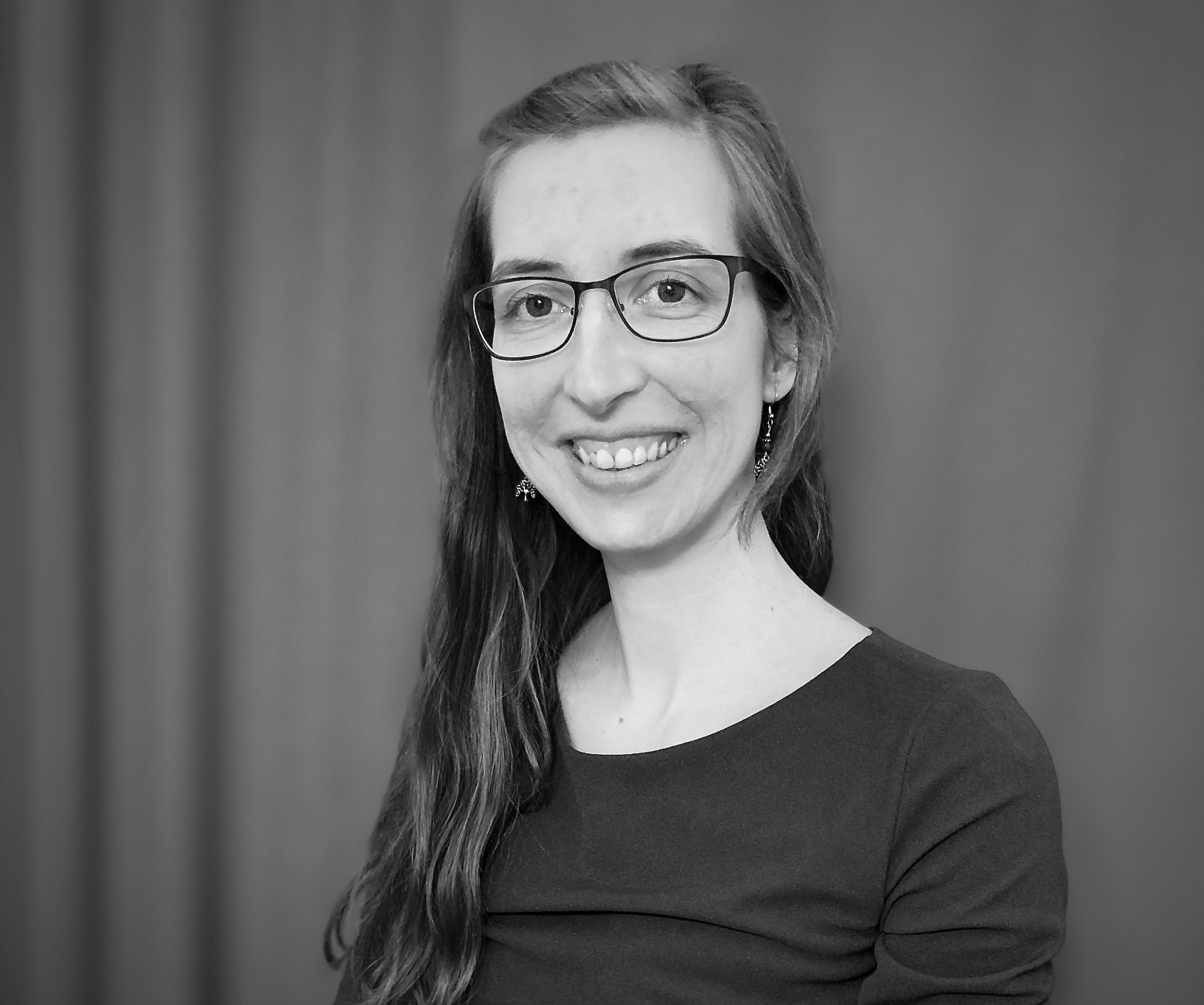
Katharina Maria Kalinowski
Katharina Maria Kalinowski is a poet, translator, and postdoctoral scholar specialising in ecopoetics, ecocriticism, and creative writing. Situated at an intersection between theory and practice, her work is particularly interested in challenging disciplinary hierarchies and navigating edges between the human and the more-than-human world. From 2017 to 2020, she was a Marie Skłodowska-Curie Fellow at the University of Cologne and completed a practice-based PhD on ecotranslation in collaboration with the University of Kent and University College Dublin (Dr Europaeus). Katharina has taught Creative Writing, Artistic Research, and Environmental Humanities in academic and community settings across Germany, England, and Ireland. Her publications include the Journal of British & Irish Innovative Poetry, Green Theory and Practice, Ecozon@, Magma, and the Irish Poetry Reading Archive.
Lizzie Smith
Lizzie is a final year PhD researcher at the University of Warwick. Her thesis investigates the disruptive potential of “weird” or uncharismatic organisms, from insects to bacteria to fungi, in contemporary ecopoetics. Her research interests include multispecies studies, dark ecology, decolonial and feminist ecologies, and posthumanism. She is keen to explore interdisciplinary perspectives, especially from the sciences, and is open to conversations about unconventional creatures or perspectives.

Marinela Freitas
Marinela Freitas is Assistant Professor of the Department of Anglo-American Studies of the Faculty of Arts and Humanities of the University of Porto. She is a member of the Board of Directors of the Margarida Losa Institute for Comparative Literature (ILCML), where she coordinates the research group Intersexualities.
She is the author of Emily Dickinson e Luiza Neto Jorge: Quantas Faces? (Afrontamento, 2014), for which she received the PEN Club Award – Essay 2015. She has co-edited several books and journals in the fields of Comparative Literature, Feminist Studies and Utopian Studies, among which are Legados e Heranças: Políticas (Inter)sexuais Hoje (with Ana Luísa Amaral, Maria de Lurdes Sampaio & Alexandra Moreira da Silva; Afrontamento, 2019); New Portuguese Letters to the World: International Reception (with Ana Luísa Amaral and Ana Paula Ferreira, Peter Lang, 2015), Novas Cartas Portuguesas Entre Portugal e o Mundo (with Ana Luísa Amaral, Dom Quixote, 2014) and Utopia Matters (with Fátima Vieira, UPorto, 2005). She has also co-edited (with Ana Luísa Amaral) an anthology of poetry addressing gender and sexualities: Do Corpo: Outras Habitações. Identidades e Desejos Outros em Alguma Poesia Portuguesa (Assírio & Alvim, 2018; 343 pp.).
As a researcher, she has participated in several national and international research projects in the area of Comparative Literature, Feminist Studies and Utopian Studies. Since 2015, she is a member of the Coordinating Team of She Thought It: Crossing Bodies in Sciences and Arts, a database with entries on women whose steps have significantly marked history in fields such as sciences, arts, music and literature (https://shethoughtit.ilcml.com/), hosted at the ILCML. From 2015 to 2019, she developed a Post-doc project on Posthuman Studies, funded by the Foundation for Science and Technology (FCT).
Megan Bromley
Megan (they/any) is an astrobiologist and poet working toward their PhD in Geological Sciences at Arizona State University. They have an MFA in Creative Writing from Randolph College, and their creative work appears in publications such as Foglifter, Penn Review, and The Auroura Journal. Their academic work can be found in Astrobiology, and forthcoming from the University of Indiana Press. Their work attempts to bridge science and the arts in ways that go beyond science communication and into new forms of synthesis between fields. Their research interests include: the interface and co-evolution of materials considered to be biotic and abiotic (especially minerals), the social and political history of astrobiology, the limits of human communication with the non-human, and much, much more. They have a cat the color of muenster cheese, and a very new film photography hobby.
Raquel Souza
Raquel holds a bachelor’s degree in Communication Science. Her passion for cultural studies, particularly American culture, led her to pursue a Master’s degree in Anglo-American Studies at the Faculty of Arts and Humanities, University of Porto. She is developing her thesis on the influence of American culture on horror films. Raquel is currently a member of the Center for Translation and Anglo-Portuguese Studies (CETAPS), where she worked as a Junior researcher in Anglo-American Studies, contributing to the production of databases and research papers, and participating in academic conferences. She is actively involved in projects at CETAPS Digital Lab, where she combines humanities research with digital tools. Ciência ID-ED1C-6449-89AC.
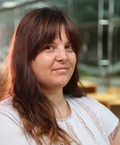
Selene Cannelli
Selene is an archaeologist by training who now works in the field of origin of life and astrobiology. Outside academia, she is also a dedicated rugby and karate athlete.As a child, she believed the Moon was following her—and while she once hesitated to follow it back, she has since realized that she could carve her own path into the space sector. After earning a bachelor’s degree in archaeology and a master’s in molecular biology, she joined the Space Generation Advisory Council (SGAC), where she discovered that everyone has a place in space. She led a team that won the Moon Society’s Moon Base Design Contest in 2020, then served as SGAC’s HR Coordinator and later as the National Point of Contact for Italy.As she explored her passion for space, Selene began applying archaeological approaches to the cosmos, advocating for orbital heritage as intangible cultural heritage. After three years seeking the right PhD program, she joined the Earth-Life Science Institute (Japan), where she now researches whether life could emerge in oceanic hydrothermal vents by studying mineral-molecule interactions that may have sparked early biochemical processes.
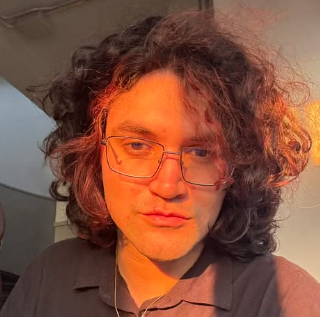
Victor Riker
Victor Matos Riker Jofilsan is a Masters degree graduate in Literary, Cultural and Interarts Studies, with a specialisation in Comparative Studies, at the University of Porto, Portugal. He holds a bachelor in Languages, Literatures and Cultures, in Portuguese and French studies given by the University of Aveiro. His main interests lie within the domain of literary theory, Brazilian, Portuguese and French literature, queer studies, monster studies and post human studies. His current research focuses on expanding the correlation between the multiplicity and literature developed on his, unanimously approved with distinction, dissertation “A propósito da multiplicidade em A Rainha dos cárceres da Grécia e em Lúcialima”, making the connection go further than what was established on the text.
 Extraterrestrial Posthumanism